Foris Intelligence
Combining classical techniques with agentic AI that understands real educational contexts, academic complexity is translated into a flexible and adaptable platform.

Combining classical techniques with agentic AI that understands real educational contexts, academic complexity is translated into a flexible and adaptable platform.
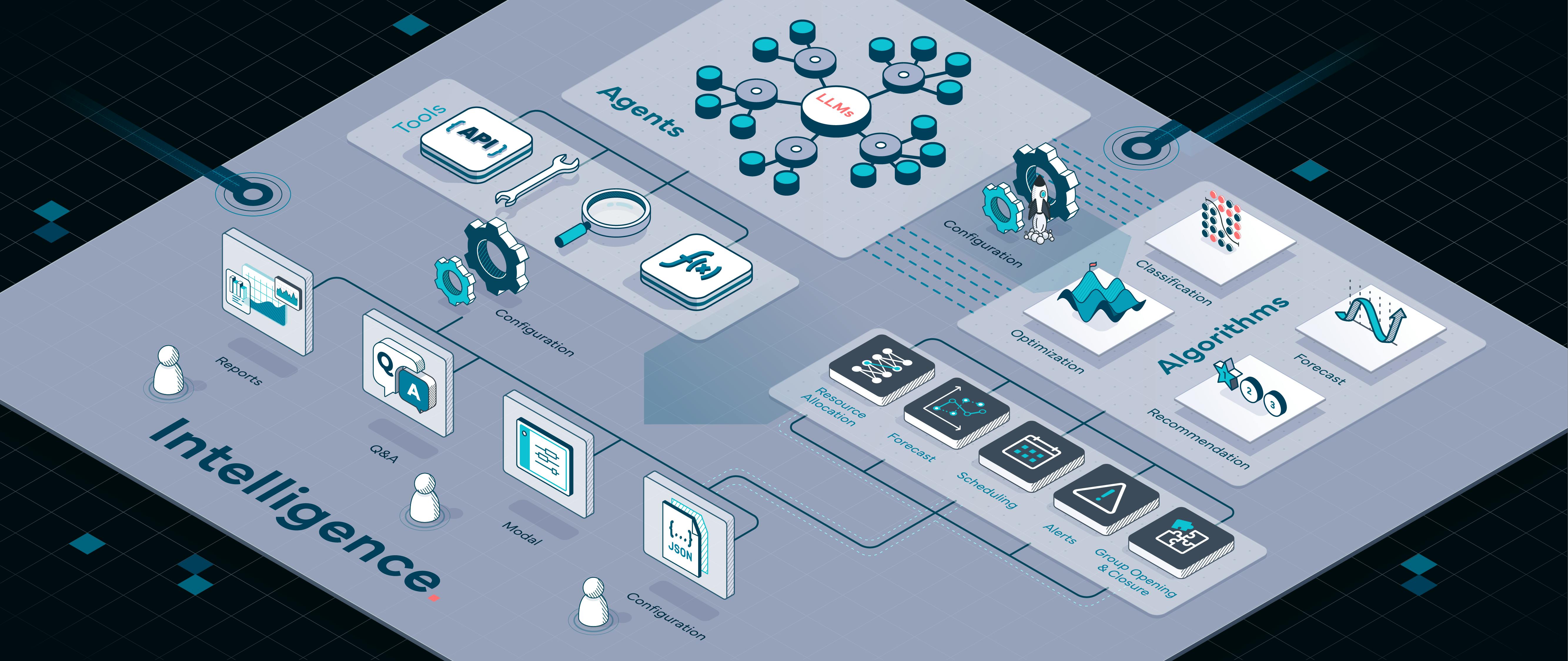
Foris understands AI as a vehicle for solving complex problems in creative ways. We decompose academic planning into multiple subproblems addressing them through a hybrid approach that combines metaheuristic techniques, classical algorithms, Machine Learning models, recommendation systems, optimization and interaction with LLM-powered agents. These capabilities, inspired by the literature and adapted to the university context, are uniquely integrated to achieve impossible results for traditional algorithms or sole human intervention.
Foris has created an intermediate layer that translates institutional rules into a language understandable by algorithms, ensuring flexibility and scalability. In addition, "we integrate agentic workflows to connect user’s natural language with university operational processes, enabling a more direct and intuitive interaction.
Our approach is grounded in continuous learning a strong engineering culture, and a human-in-the-loop model to ensures control and transparency across AI systems.
An intelligence framework that integrates advanced analytics, agentic capabilities and optimization models to address academic complexity from multiple angles.

A range of Machine Learning and Data Analytics techniques and algorithms are applied to analyze and predict key phenomena across each institution’s student and administrative processes.

Agentic workflows and assistants are designed to enable complex queries and task execution through natural language, accelerating technical work and simplifying interaction with the platform.

Optimization algorithms are combined with proprietary heuristics to solve academic planning, scheduling, and university resource allocation problems.
AI-driven approach to automate key processes, reducing friction and elevating institution's experience.


What we’re always asked about our technology :)
How do your solutions integrate with our existing systems?
Through real-time integrations with academic systems and other key university platforms. The synchronization process is streamlined, ensuring agile and efficient control over academic data while eliminating the complexity of data transfers and manual uploads.
Do we need fully clean data to use your AI models?
No. Our solutions include data validation, standardization, and enrichment pipelines. As long as your data sources are available and accessible, the processing is handled to ensure the models operate correctly.
How explainable are the models you use?
Highly explainable. Techniques are used to make it clear why a model arrives at a given recommendation. Institutions can audit, adjust, or create rules using natural language.
Does the technology require advanced technical expertise from the university?
No. Complex workflows are automated through agentic assistants and natural language rules. Day-to-day operations do not depend on technical teams, the AI runs in the background while users interact through simple, intuitive interfaces.
Does your AI replace processes or teams within the university?
No. The AI automates operational and technical tasks, but final decisions remain with the institution through a human-in-the-loop approach. Teams are empowered, not replaced.
Does the solution work if we have multiple campuses, programs, or academic calendars?
Yes. The entire architecture is designed for multi-scenario environments. Models and rules adapt to each campus, program, or academic structure without requiring duplicated configurations.
What happens if our academic policies or institutional rules change?
Changes can be adjusted quickly through our DSL and natural language compatible rules engine. No full system reconfiguration or code-level intervention is required.
Does your technology scale as the institution grows?
Yes. From the ground up, the AI is built for scale: models, pipelines, and agents operate reliably under high data volumes, growing student populations, and increasing academic operational demands, without performance degradation.
CONTACT
Please contact our team, to learn more about our solutions
